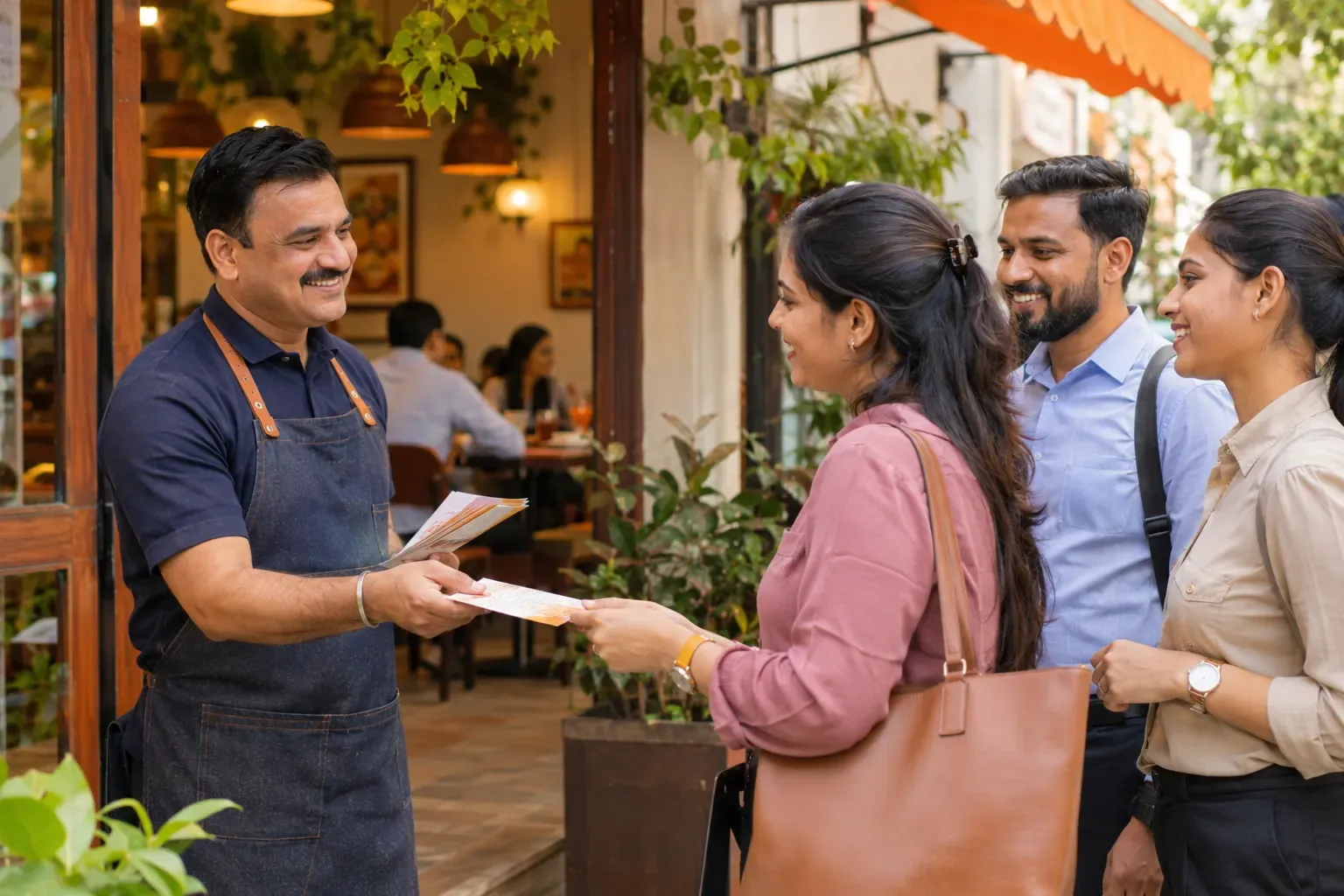
Start with the people already nearby
A restaurant does not need to reach a whole city. It needs to be easy to find and easy to choose for people nearby. These are people who live, work or travel close to you.
Write down the three groups most likely to visit. For example: office workers at lunch, families at dinner and residents who want takeaway.
Pick one offer and one message for each group. Do not send the same promotion to everyone.
Make your online information accurate
Keep your menu, hours, location, phone number and ordering steps the same everywhere. If you are eligible for a Google Business Profile, keep it correct and add real photos.
Never create a false location. Never buy reviews. A guest who finds an old menu or a dead phone number may simply pick another restaurant.
Turn one good visit into another
Train staff to ask for feedback after a meal. Give guests a clear way to contact you. With their permission, send them updates.
A small thank-you or a useful tip can work better than a big discount. Count how many guests return within 30 days. Do not only count the messages you send.
Our guide to collecting guest feedback shows a simple way to ask.
Build neighbourhood partnerships
A cafe might team up with a nearby bookshop for a weekend event. A lunch outlet might offer a pre-order pickup window for office teams.
Keep the deal open and clear. Work out its cost and track each redemption. Do not give away so much margin that more guests bring less profit.
Example: a slow Tuesday lunch
Say a restaurant serves 20 lunch orders on a Tuesday. The average bill is ₹250. A pre-order plan for a nearby office adds eight orders.
That is ₹2,000 more in sales (8 × ₹250). It is not ₹2,000 more profit.
Say ingredients, packaging and other variable costs are ₹110 per added order. Each added order then leaves ₹140.
| Line | Amount |
|---|---|
| Added orders | 8 |
| Average bill | ₹250 |
| Added sales | ₹2,000 |
| Variable cost per added order | ₹110 |
| Added contribution: 8 × (₹250 − ₹110) | ₹1,120 |
This is before any extra fixed or campaign costs. Try your own numbers in the discount impact calculator.
A seven-day action plan
- Day 1: check your hours and menu.
- Day 2: improve five real food photos.
- Day 3: find nearby offices or housing groups.
- Day 4: create one profitable lunch offer.
- Day 5: train staff to ask for feedback politely.
- Day 6: make your direct ordering steps clear.
- Day 7: review enquiries, orders and repeat visits.
What to do next
Pick one nearby group, such as the office next door. Write one lunch offer for them and work out its contribution first. Run it for two weeks. Count the orders and the repeat visits before you spend more.
Where Zentaro Serve fits
Zentaro Serve gives each outlet a direct ordering link for takeaway and delivery. It also keeps a guest list and sales reports. These help you see which channels and repeat visits work. Zentaro Serve launches in 2027.
Common questions
Should I offer discounts to attract customers?
Only when the extra contribution covers the discount and any added costs. Test a small offer first.
Can I ask customers for Google reviews?
Yes. Ask for honest reviews. Do not offer rewards, ask only happy guests or pressure anyone.
The examples use sample figures. Check current rules for your own case.