One platform.
Your kind of restaurant.
Most systems treat every restaurant as the same restaurant — a bar gets the same screens as a bakery, with a different logo. Zentaro Serve ships real, segment-specific operations: a token queue for the counter, courses for the dining room, batches for the oven. Not a theme change.
Find your format.
The capabilities underneath are different, and that is the point. Every card below lists what that format actually gets, not a rebadged version of the same feature.
The floor runs on tables, servers and split payments.
Service here is about who took the order and who's paying for what. Zentaro Serve keeps both straight without slowing the floor down.
- Floor plan with table-side ordering, attributed to the server who took it
- Settle one bill across several payment methods — cash, UPI and card together
- Pay-at-table by QR — a scan on the bill settles it, straight to your account
- Guest feedback via a QR on the bill
Service is choreography. The system keeps time.
A tasting menu falls apart when the kitchen fires courses out of order or the rooftop charges dining-hall prices. This format gets pacing and precision built in.
- Course-wise service with kitchen coordination — fire courses when the table is ready
- Dining-area pricing: AC, rooftop and garden priced as separate zones
- Reservations with an advance payment and a cancellation policy
- A change audit trail on every menu edit
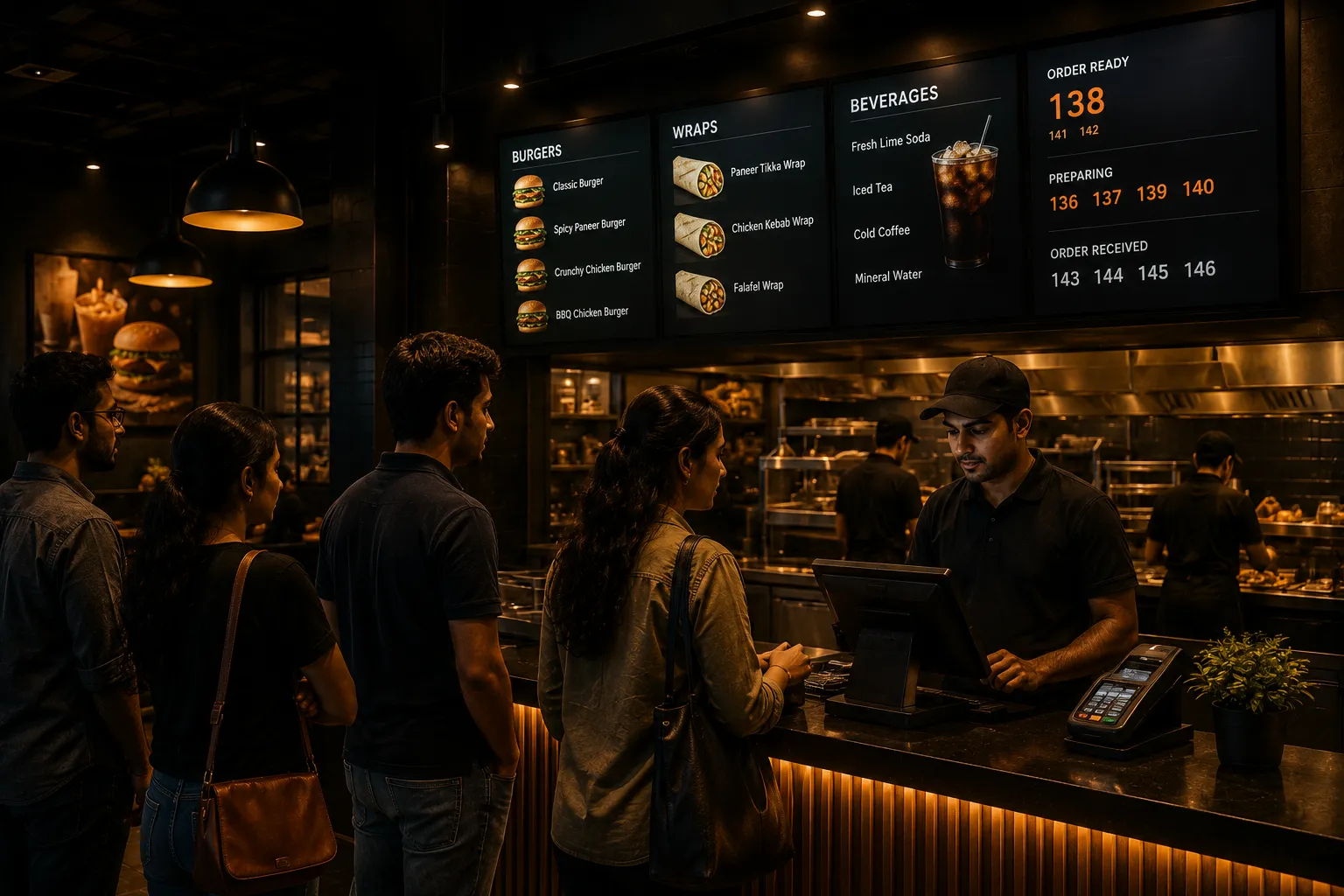
Speed is the product. Everything serves the queue.
At the counter, seconds per order decide your lunch rush. This format is built around the token — from order to "now serving" to a complete bag.
- Token queue with a customer-facing "now serving" display
- A fast lane for quick counter sales
- Packing checklists, so the bag is checked before it leaves the pass
- UPI QR payments recorded at counter speed
Tabs run all evening. The cash has to reconcile at close.
A bar's bill isn't finished until the last round is — and the drawer has to balance after a long, busy night. This format handles both ends of the evening.
- Open tabs that stay live all evening and settle at close
- Per-station routing — the bar prints its own tickets, the kitchen prints its own
- Cashier sessions with day-end drawer reconciliation
- Manager-PIN approval for discounts
You produce before you sell. The counter comes second.
A bakery's day starts hours before the first customer, and margins live in the recipe. This format tracks what you bake, what sits on the shelf and what it truly costs.
- Bakery production — batches, shelf stock, dispatch and write-offs
- Gift cards and wallet credit
- Loyalty for the regulars who come in every morning
- Recipe costing for every SKU
One kitchen, many brands, orders from everywhere.
The kitchen doesn't care which brand an order belongs to — the pass just has to move. This format merges every source into one flow and still reports them apart.
- One kitchen screen for dine-in and every delivery brand
- Aggregator orders entered by AI from a photo, screenshot or order email, then checked by your team
- Tag and report orders by source
- Dispatch workflow from pass to handover
You don't sell orders. You sell a month of meals.
A tiffin business runs on subscribers, not walk-ins — who's on which plan, who skipped today, who's paid up. This format is built around the calendar, not the counter.
- Subscription plans with a delivery calendar
- Skips, holidays and attendance tracked per subscriber
- Subscription billing
- Analytics, profit per plan and a forecast for next week
More formats.
Everything shares one core.
Whichever format you run, the same foundation runs underneath — so a bar and a bakery get equally serious billing, tax and inventory. The segment layer changes how you operate; the core never changes what you can trust.
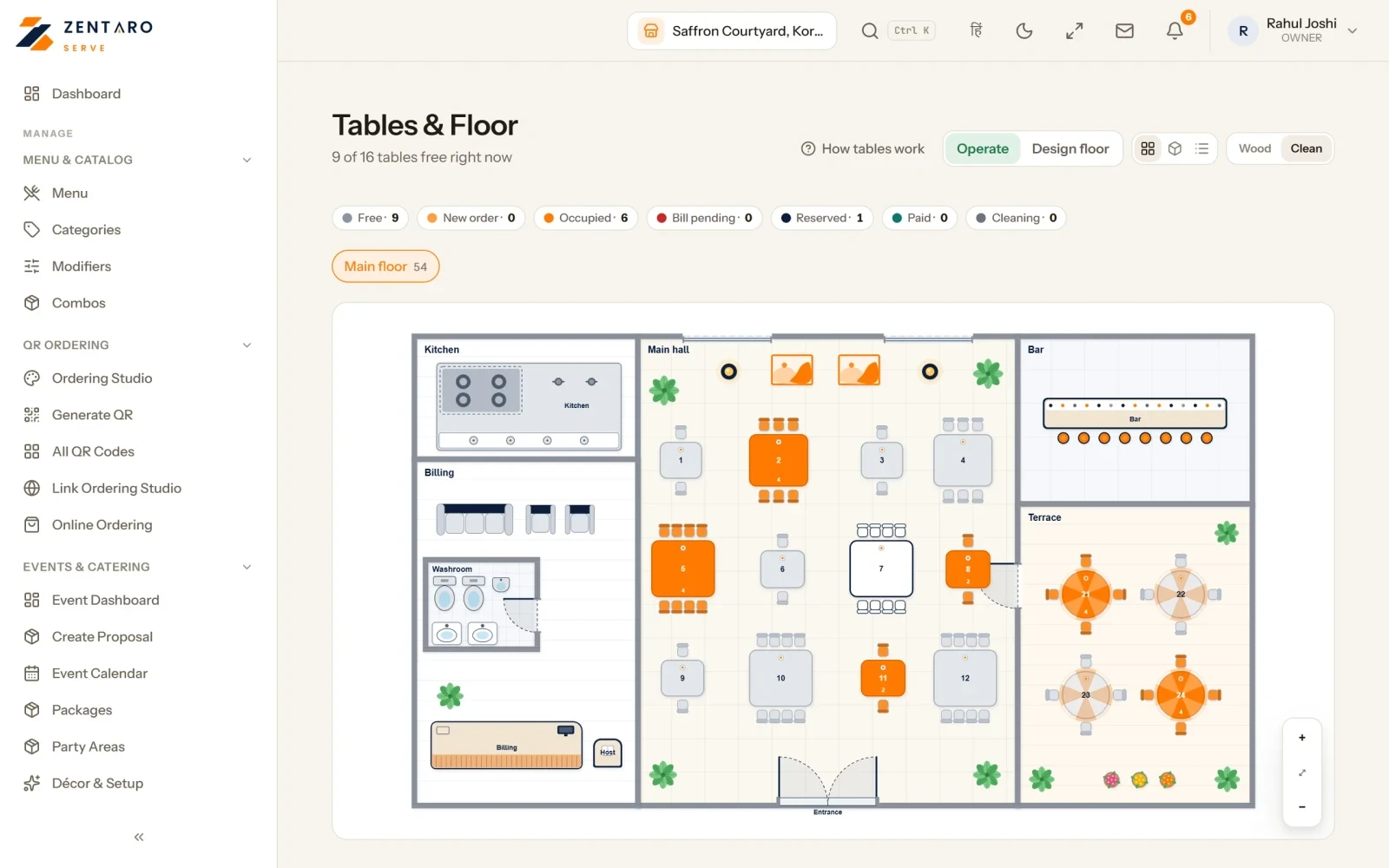
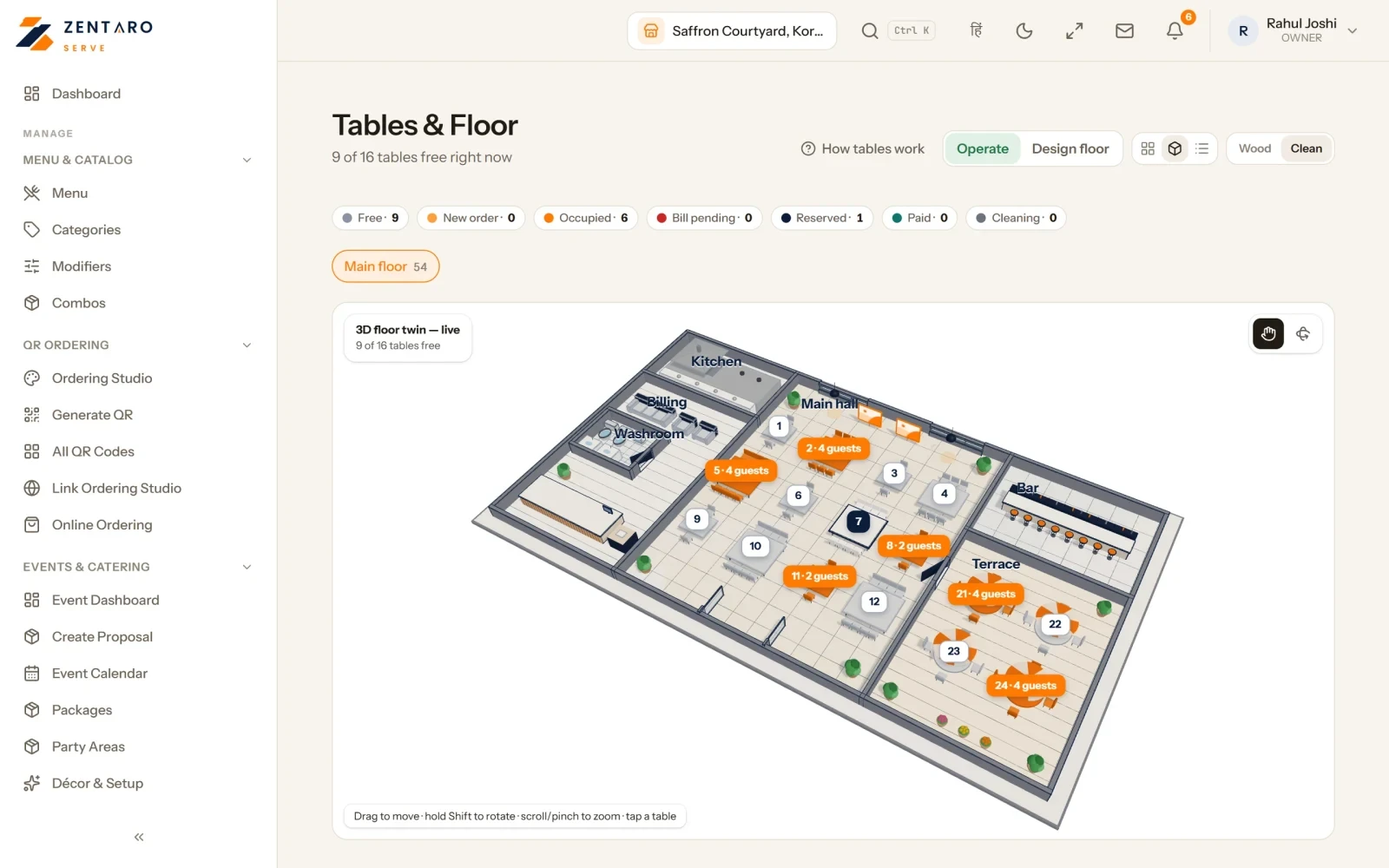
Plan your floors, areas and tables, and see them live.
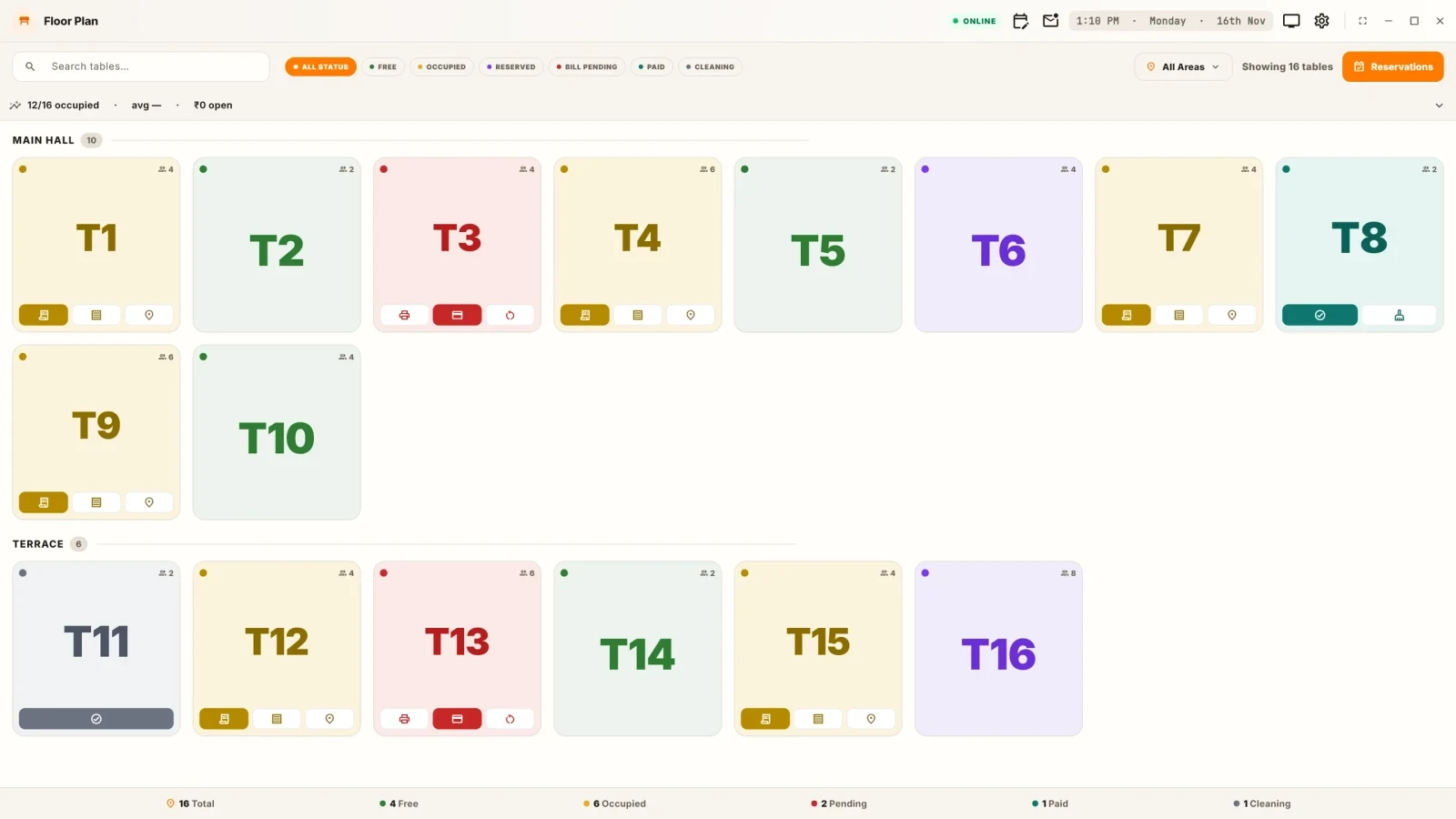
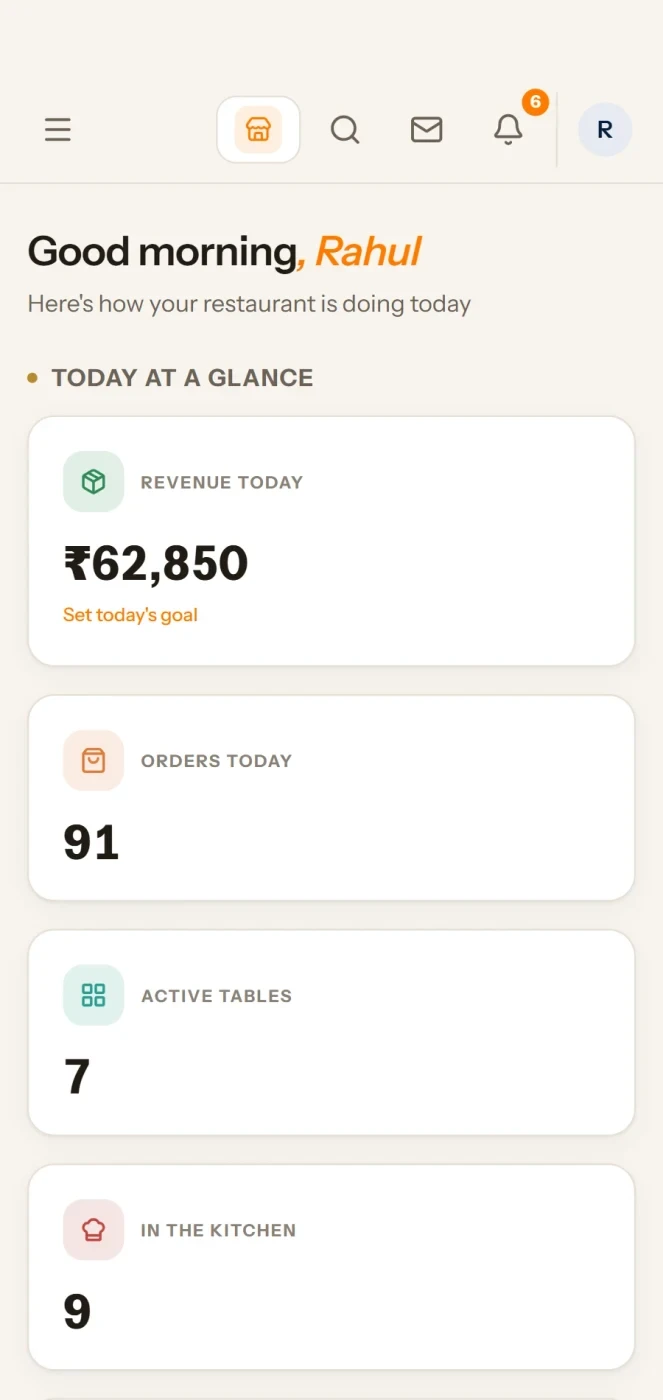
Example screens with sample data
A straight note on how this is packaged: segment capabilities are enabled per outlet. You switch on what your format needs and leave the rest off.
Try it as your restaurant.
Pick your format on day one and the system sets up as your kind of restaurant — your floor, your queue, your calendar — not a generic demo.
Last updated: