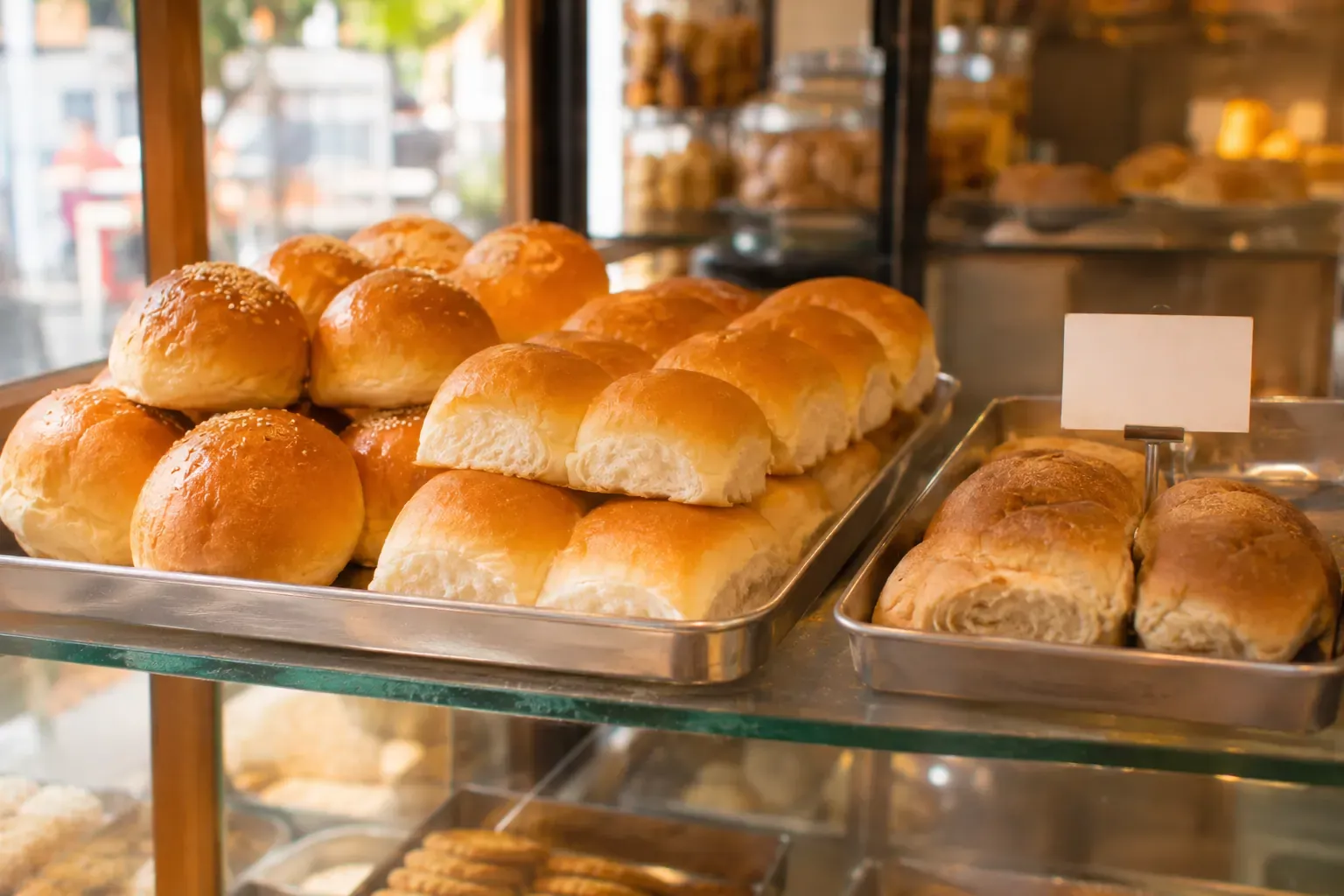
Why a bakery is different
A restaurant cooks to order. A bakery bakes first and sells later. That makes two problems: how many to bake, and what to do with what is left. Billing helps with both, if the items are set up right.
Day-old stock: fresh and day-old as two items
Set up each product twice: "Bun, fresh" and "Bun, day-old". Why:
- The prices differ.
- Stock moves from one to the other at closing.
- You can see how much day-old you sell and how much you throw.
- Reports on fresh sales stay honest.
Label day-old trays with the bake date. Keep them on a separate shelf. Staff then know which one to ring.
By piece, and by weight
| Product | How to sell | Why |
|---|---|---|
| Buns, loaves, pastries | By piece | Every piece is about the same |
| Cakes | By weight | Sizes vary, and guests buy a half or one kilo |
| Cookies and rusks | By weight or by pack | Sold loose or packed |
For weight items, put the tray on the scale with the box and use the tare function so the scale shows net weight. Example: a cake costs 600 per kg. A 750 g cake is 450. If the cashier forgets to remove the 60 g box, the bill shows 810 g and charges 486. Guests notice, and it is unfair to them.
The daily bake count
Do not bake the same number every day. Use recent sales for the same weekday.
Bake count = average of the last four same weekdays, plus a small buffer
Example: one day of bake, sell and leftover
This is an example, with made-up numbers. A bakery sells a bun. It costs 12 to make and sells for 30 fresh. Day-old buns sell for 15.
Setting the bake count
| Last four Mondays | Buns sold fresh |
|---|---|
| Week 1 | 160 |
| Week 2 | 172 |
| Week 3 | 165 |
| Week 4 | 171 |
| Average | 167 |
With a 5 percent buffer, 167 times 1.05 is about 175. The bakery bakes 175.
What happens on Monday
| Step | Count |
|---|---|
| Baked | 175 |
| Sold fresh | 168 |
| Left over | 7 |
In this case the bakery made a good guess. A leftover of 7 is small.
A different Monday: the bakery baked 200
| Step | Count | Value |
|---|---|---|
| Baked | 200 | Cost 2,400 |
| Sold fresh | 168 | Revenue 5,040 |
| Left over | 32 | |
| Sold next day as day-old | 20 | Revenue 300 |
| Thrown away | 12 | Loss of cost, 144 |
Profit on the batch: fresh 5,040 plus day-old 300 minus cost 2,400 equals 2,940. If all 32 had been thrown away, the profit would be 2,640. The day-old price added 300. Now compare a better guess. Had the bakery baked 175, the cost would be 2,100. It would sell 168 fresh for 5,040 and the 7 leftover as day-old for 105. Profit: 5,040 plus 105 minus 2,100 equals 3,045. That is 105 more than the overbake, with less work. A good bake count is worth more than a good day-old price.
Pricing day-old
Pick a price that moves stock without teaching guests to wait for it. A big discount can pull guests from fresh to day-old. Watch the numbers. If fresh sales drop as day-old sales rise, the discount is too deep.
Day-old also has limits. Some items, such as cream cakes, should not be sold the next day at all. Check food safety rules for your products.
Wastage
Count what you throw each day, by item. A bakery's wastage is mostly unsold stock and burnt batches. Write it in a register. See the wastage register. Compare it with your bake count each week.
Festive orders
Festival weeks bring big cake and box orders. Take them in advance.
- Record the date, the item, the weight or count and the pickup time.
- Take a deposit when you take the order.
- Set a cut-off, such as two days before.
- Tell the baker the total for each day, so they bake the right amount.
- Do not count festive orders as part of the normal bake count.
See festive pricing with date windows for prices that switch on and off by date.
Common questions
How should a bakery bill day-old items?
Set them up as a separate item with its own price, so stock, sales and wastage are clear.
Should cakes be sold by weight?
Yes, often. Sizes vary, and guests buy by the half or whole kilo. Use the tare function for the box.
How do I decide the daily bake count?
Use the average of the last four same weekdays, plus a small buffer.
Should every item be sold day-old?
No. Some, such as cream items, should not be sold the next day. Check food safety rules.
How do I handle festive orders?
Take them in advance with a date and a deposit, and tell the baker the daily total.