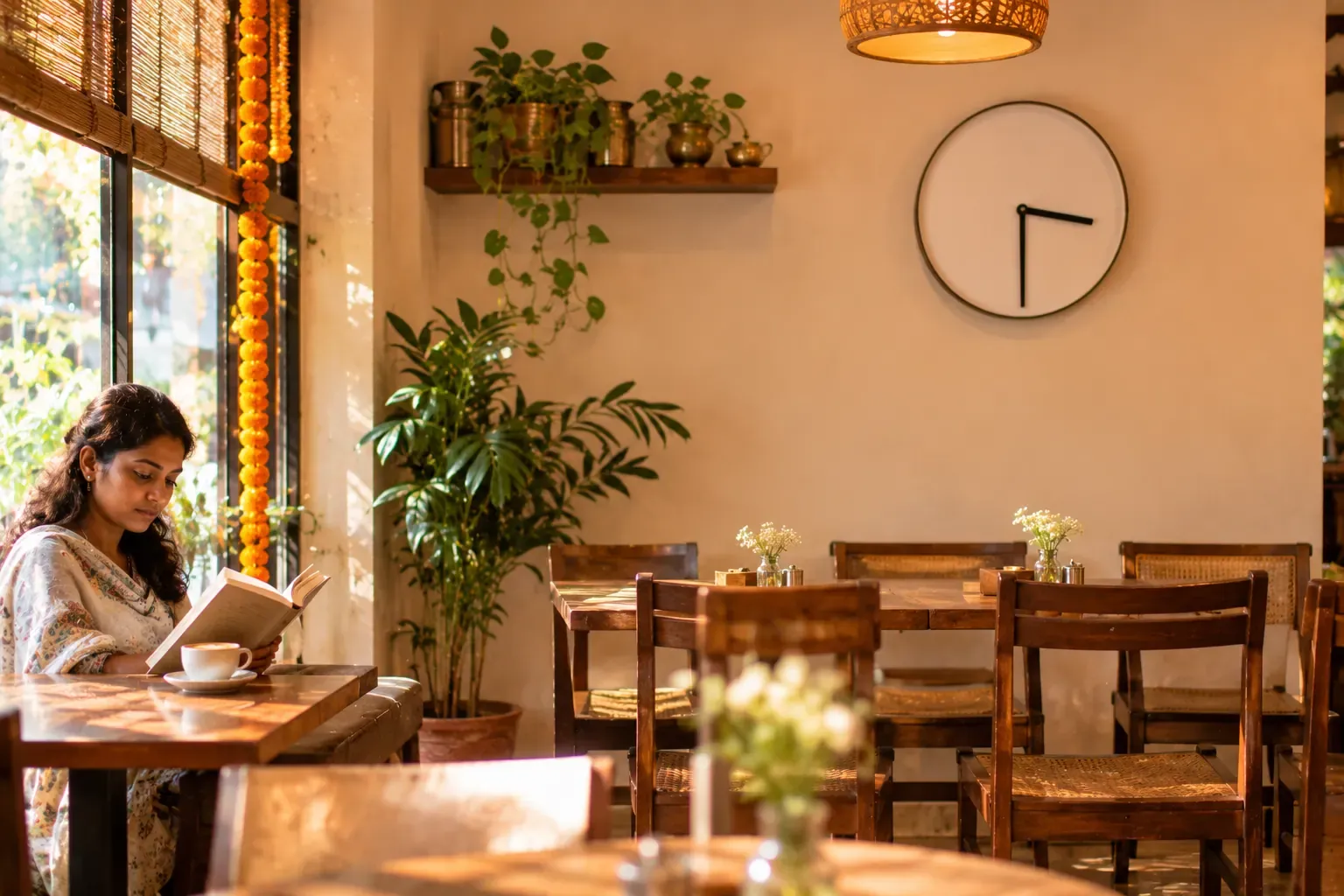
What happy hours are for
The goal is to fill seats when they are empty. A table that sits empty from 3 to 5 pm earns nothing, but the rent, the power and the staff still cost money. A guest who comes in at a lower price still pays something toward those costs.
That is the only good reason to do it. Happy hours that run in your busy time only give discounts to guests who would have paid full price.
Find your slow hours
Look at your sales by hour, from your billing reports.
- List sales for each hour across a few weeks.
- Mark the hours with the lowest sales.
- Check that they are slow every week and not only once.
- Choose a window inside those hours.
Our reports page shows what such a view looks like.
Choose the time window
A time window is a fixed start and end time, on set days. Keep it clear and short.
- Two hours is easy to remember.
- Pick the same days each week.
- State the end time on the menu and the bill. Staff must not stretch it.
- Do not run it during a rush hour.
Choose the items
- Pick items with a high margin, such as drinks and snacks.
- Avoid your lowest-margin dishes.
- Offer a combo, such as a snack and a drink, rather than a blanket discount. See combo pricing.
- Keep the list short, so staff and guests understand it.
If you sell alcohol, discounts and happy hours on it are restricted in some states and by some licence conditions. Check your excise licence before you discount any alcoholic drink.
The break-even check
Every discount has a cost. Work out how many extra guests you need.
Break-even extra sales = profit lost per sale divided by profit left per sale
Let us see this with an example.
Example: a cafe with an empty 3 to 5 pm slot
This is an example, with made-up numbers. An iced coffee sells for 120 and costs 30 to make. The cafe sells about 10 of them between 3 and 5 pm on an average day.
| Item | Normal | Happy hour at 25 percent off |
|---|---|---|
| Price | 120 | 90 |
| Cost | 30 | 30 |
| Profit per cup | 90 | 60 |
| Cups in the window | 10 | Needed to match |
| Profit | 900 | 900 |
At 60 profit per cup, the cafe needs 15 cups to earn the same 900. That is 5 more cups, or 50 percent more, just to stand still. Anything above 15 cups is new profit.
Notice a risk. Some of the 10 regular guests would have paid 120 anyway. They now pay 90. If you get no new guests, the cafe loses 300 a day.
Now count the other items. Guests who come for a cheap coffee may also buy a cake. If a third of the new guests add a cake with a good margin, the cafe gets more. Also, a guest who tries the cafe in a slow hour may return at full price. These gains are real, but you must watch them in your own numbers and not assume them.
Our discount impact calculator can run this sum for you.
Offers that are not a discount
A smaller discount can work as well.
- A free add-on instead of a price cut, such as a free cookie with a coffee.
- A buy-two offer for groups.
- A loyalty reward for slow-hour visits. See loyalty points for a small restaurant.
These can cost you less than a straight price cut.
Measure and decide
Run the offer for four weeks. Compare these with the four weeks before:
- Sales and number of guests in the window.
- Average bill in the window.
- Sales just before and after the window. Did guests only move from a busy hour?
- Profit, not only sales.
If profit does not rise, change the offer or stop it.
Common mistakes
- Running it in the busy hours. You discount guests who would pay full price.
- A long window. The discount spreads into good hours.
- Discounting low-margin items. The break-even is out of reach.
- No end time on the bill. The window slowly grows.
- Looking only at sales. Look at profit.
A short checklist
- Have you found your slow hours in the sales report?
- Is the window short, fixed and printed?
- Are high-margin items chosen?
- Have you worked out the break-even?
- Will you measure profit after four weeks?
Common questions
How do I run happy hours without losing money?
Use them only in slow hours, pick high-margin items, keep the discount small and work out the break-even first.
What is break-even for a discount?
It is the number of extra sales you need so that the discount does not reduce your total profit.
How long should a happy hour be?
Two hours is easy to remember. Keep it inside your slow hours and state the end time.
Should I discount everything?
No. Pick items with a good margin, or offer a combo, so the offer stays profitable.
How do I know if happy hours work?
Run them for four weeks and compare profit, guests and average bill in the window with the weeks before.