What a combo is for
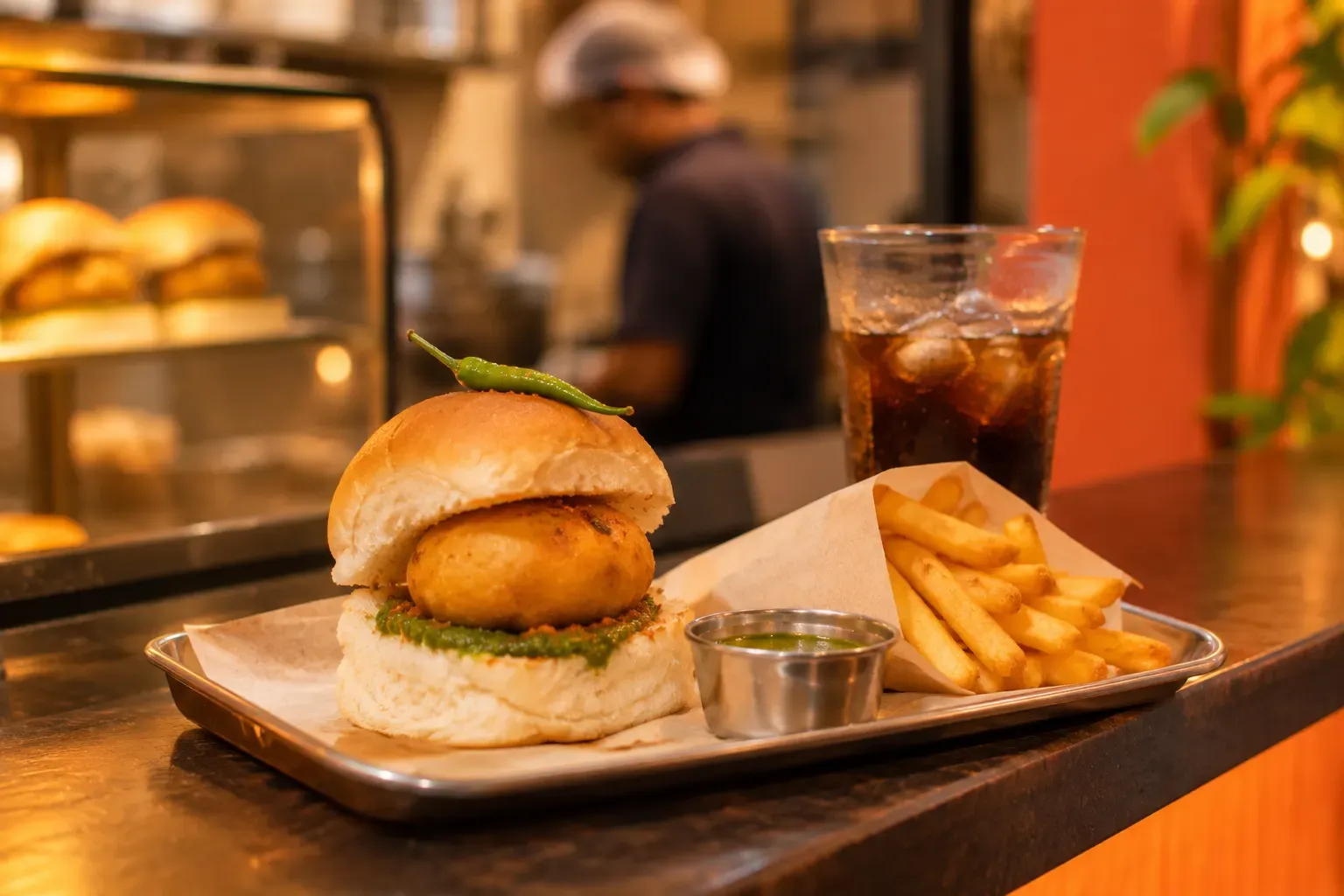
A combo bundles items at one price: a burger, fries and a drink; a thali with set dishes; a tea and a snack. It has two jobs.
- It makes ordering quick for the guest.
- It lifts the amount each guest spends, for example by adding a drink to a burger.
It does not have a job as a pure discount. A combo that only gives away margin is a loss.
Start from cost
Write down the cost of every part. Use your recipe costing or your best estimate. Then work out:
- The price if sold separately.
- The total cost of the combo.
- The margin, which is the price minus the cost.
Choose the discount
A combo usually has a small discount against the separate prices. The discount is the reason a guest picks it. Keep it small. A rule of thumb: give a discount big enough to be seen, small enough that you still earn well on each combo.
Example: a burger, fries and drink combo
This is an example, with made-up prices and costs.
| Item | Price alone | Cost |
|---|---|---|
| Burger | 150 | 55 |
| Fries | 80 | 20 |
| Soft drink | 60 | 15 |
| Total | 290 | 90 |
Sold separately, the three items earn 290 minus 90, which is 200. That is a margin of about 69 percent.
Now price the combo at 249.
| Item | Separate | Combo |
|---|---|---|
| Price | 290 | 249 |
| Cost | 90 | 90 |
| Profit | 200 | 159 |
| Margin | About 69 percent | About 64 percent |
The guest saves 41. The cafe earns 41 less on each guest who would have bought all three anyway. This is the discount impact. It is the cost of the combo.
The break-even check
The combo pays only if it brings extra profit from guests who would not have bought all three.
- A guest who would buy only the burger gives you a profit of 95 (150 minus 55).
- If that guest takes the combo instead, you earn 159. That is 64 more.
- A guest who would have bought all three anyway now gives you 41 less.
To break even, you need about 64 upgrades for every 100 guests who already buy all three. That is because 64 x 64 is about 4,096, close to 100 x 41 = 4,100.
Ask: do I think the combo will move that many burger-only guests up? If most guests already buy all three, the combo loses money. If many guests buy only a burger, the combo can help.
Our discount impact calculator does this sum for you with your own numbers.
Add-ons and modifiers
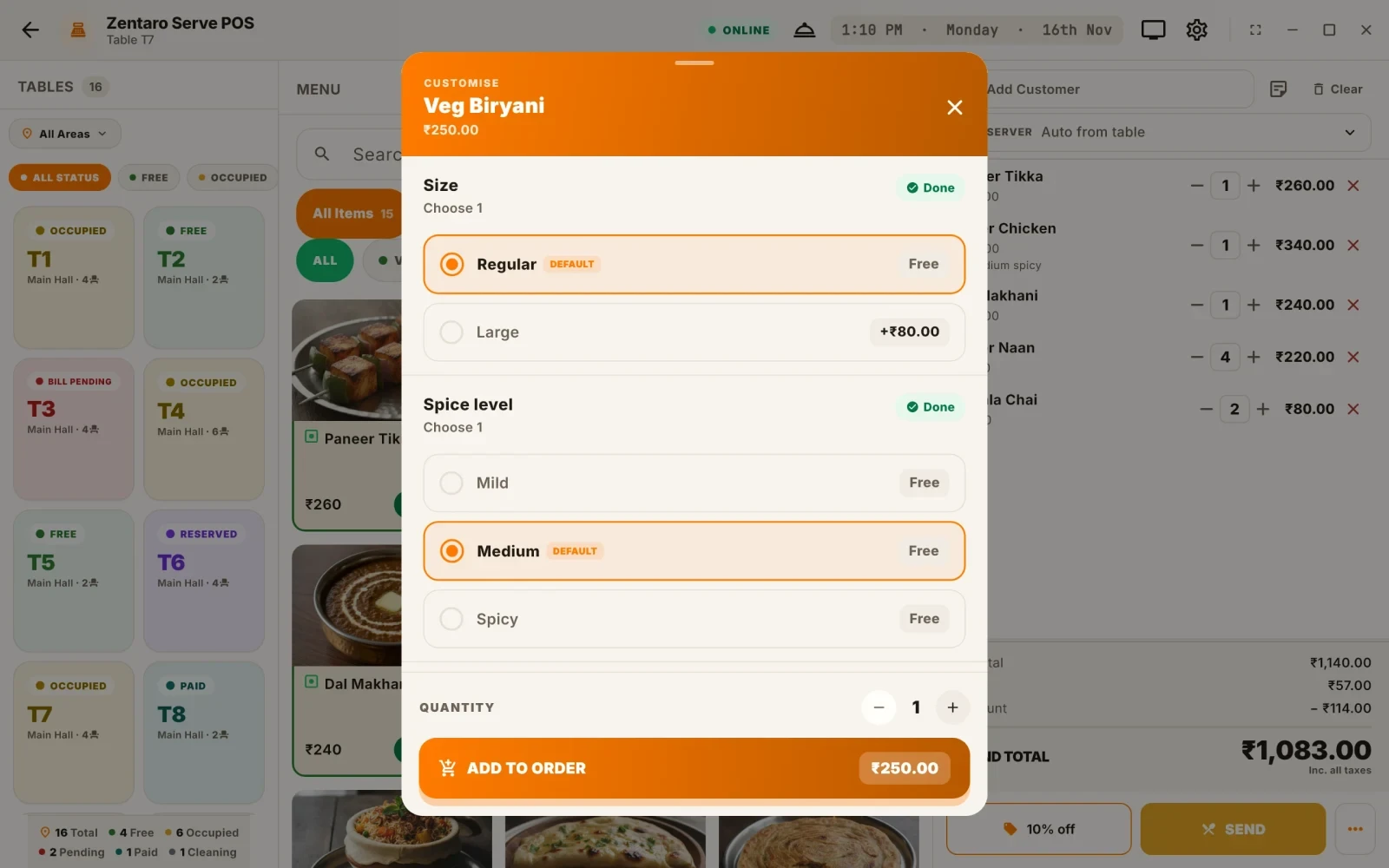
Combos get complicated when guests want changes. A guest may want a large drink instead of a small one, or a different side.
- Offer a fixed list of swaps, each with a price difference. For example, a large drink adds a set amount.
- Treat each swap as a modifier on the combo item. See how to bill modifiers and add-ons.
- Do not let staff make up prices at the counter.
The thali: a combo you already know
A thali is a classic combo. It is a plate with a set of dishes at one price. It works because the cook preps fixed amounts and the guest sees good value. Cost it the same way: add the cost of each dish and portion, then set the price. Check the portion size, because a generous spoon can erase the margin. See yield and portion size.
What to watch after launch
- Does the combo sell? Check the sales count each week.
- Does the average bill rise?
- Does the sale of the single items fall? Some fall, which is fine if the total profit rises.
- Does the kitchen cope with the new pattern?
If a combo does not lift profit after a month, change it or stop it.
Common mistakes
- Pricing from a round number. Start from cost.
- Discounting too much. The guest still sees value with a small discount.
- Bundling low-margin items together. Put at least one high-margin item in.
- Not testing break-even. You may pay for guests who would have bought anyway.
- Never reviewing. Keep the combo only if it earns.
A short checklist
- Is the cost of each part written down?
- Is the combo margin worked out?
- Is the discount small and clear?
- Have you checked the break-even?
- Are swaps priced in a fixed list?
- Will you review the combo after a month?
Common questions
How do I price a combo?
Add up the cost of the items, set a price with a margin you accept, and check how much you give up on guests who would buy everything anyway.
How much discount should a combo have?
A small one. It should be big enough for the guest to see value and small enough that you still earn well.
What is discount impact?
It is the profit you lose on guests who would have bought the items at full price anyway.
Is a thali a combo?
Yes. A thali is a plate of set dishes at one price. Cost it by adding the cost of each dish and portion.
How do I know if a combo works?
Check after a month whether the combo sells, whether the average bill rises and whether total profit goes up.