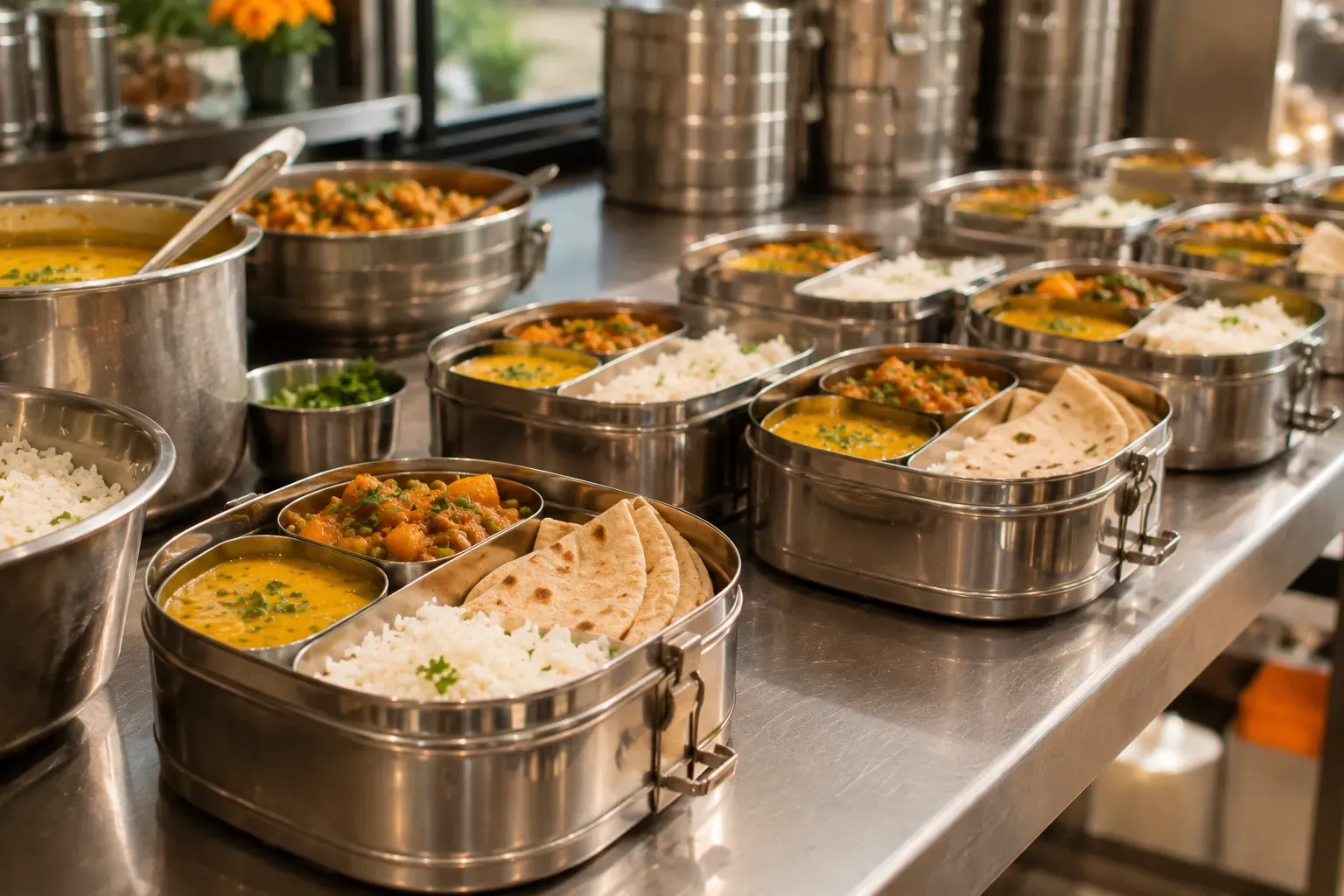
Start with the meal count
A monthly plan is a promise of meals. Be clear on how many.
- How many days a week do you serve? Six days gives about 26 a month. Five days gives about 22.
- Is it lunch only, dinner only, or both?
- Are festival days and Sundays included?
Write the number. All your costs and your price follow from it. If a customer asks for a discount for skipping, you will need the number again.
The costs to include
For a tiffin service, the cost of one meal has more parts than a restaurant plate.
| Cost | What it covers |
|---|---|
| Food | Ingredients for the meal: sabzi, dal, rice, roti, extras |
| Packing | The box, foil, bag, spoon, label |
| Delivery | Rider's pay, fuel, or your own van share, per meal |
| Fuel and kitchen | Gas, electricity, water, a share |
| Labour | Cooks and packers, per meal |
| Rent and licence | A share of fixed costs |
| Wastage | Extra meals cooked and not sold |
| Payment charges | For UPI or card, if any |
A common error is to cost only the food. That makes the plan look cheap to run. The other items together often cost as much as the food.
Step by step
- Cost the food for one meal. Use a recipe for each item. See how to cost a dish.
- Add packing for one meal.
- Work out delivery per meal. Take your monthly delivery cost and divide it by the meals delivered.
- Add a share of kitchen, labour and fixed costs. Take the monthly total and divide by the total meals you make in a month.
- Add wastage. If you cook a few extra meals each day, spread their cost across the meals you sell.
- Add your margin, the part you keep.
- Multiply the meal price by the meal count.
- Check the result against what customers nearby pay.
Skip days
Customers skip. They travel, fall ill or eat out. Decide your rule before you sell the plan, because the rule affects your price.
- No skip, no refund. Simple, but customers may feel it is unfair.
- Skip with notice, and the day is added to the end. The customer gets all the meals they paid for. You must plan the extra days.
- Skip with notice, and a credit. The meal is credited against next month.
Whatever you choose, write it in the plan. A clear rule prevents arguments. A rule that gives credit costs money, so build a small allowance into your price.
Example: a 26-day lunch plan
This is an example with made-up numbers.
| Cost per meal | Amount |
|---|---|
| Food (roti, sabzi, dal, rice) | ₹42 |
| Packing | ₹7 |
| Delivery | ₹10 |
| Kitchen, fuel and labour share | ₹14 |
| Rent and licence share | ₹4 |
| Wastage allowance | ₹3 |
| Cost per meal | ₹80 |
For 26 meals, the cost is 26 × ₹80, which is ₹2,080.
Now add a margin. If the owner wants to keep about 20 percent of the price, divide the cost by 0.80. ₹80 ÷ 0.80 is ₹100 per meal. For 26 meals, the plan is ₹2,600.
| Plan | Price per meal | Monthly price |
|---|---|---|
| Cost only | ₹80 | ₹2,080 |
| With about 20% margin | ₹100 | ₹2,600 |
| Rounded for the market | ₹98 | ₹2,548 |
If the owner allows skip days, with the days added at the end, a customer who skips three days still gets 26 meals. The cost does not change, but the service stretches over more days. If nearby services charge less, the owner may round the price down, accept a thinner margin, or trim the cost. These are example numbers, not a price suggestion.
Check your assumptions
A tiffin price rests on guesses. Test them.
- Meals sold vs meals cooked. If you cook 100 and sell 92, the other 8 are wastage.
- Delivery batching. Delivery per meal falls when drops are close together. It rises when one rider carries only a few boxes.
- Plan mix. If half of your customers take a smaller plan, your average cost per meal may rise.
Look at actual numbers after the first month and adjust.
Common mistakes
- Costing only the food.
- Leaving out delivery or packing.
- Selling "unlimited skips" with no cost in the price.
- Giving a big discount for a long plan, and losing money on the whole plan.
- Not counting wastage.
- Never re-checking costs when rates rise.
A short checklist
- Is the meal count clear for the plan?
- Does the cost include food, packing, delivery, labour and fixed share?
- Is there a small allowance for wastage and skips?
- Is the skip rule written?
- Have I compared nearby prices?
- Will I re-check after a month?
Common questions
How do I price a monthly tiffin plan?
Work out the cost of one meal, including delivery and a share of fixed costs, add your margin, and multiply by the number of meals.
How many meals are in a monthly plan?
It depends on the days you serve. Six days a week gives about 26 meals in a month.
Should delivery be included in the price?
Include its cost in your price, even if you show it as free delivery.
How do I handle skipped days?
Choose a clear rule, such as adding the day to the end or giving a credit, and write it in the plan.
What is the difference between a mess and a tiffin service?
A mess usually serves meals at a place, often to a regular group. A tiffin service sends the meals out. Pricing steps are similar.
How often should I review my price?
When ingredient or fuel costs change, and at least every few months.
Where Zentaro Serve fits
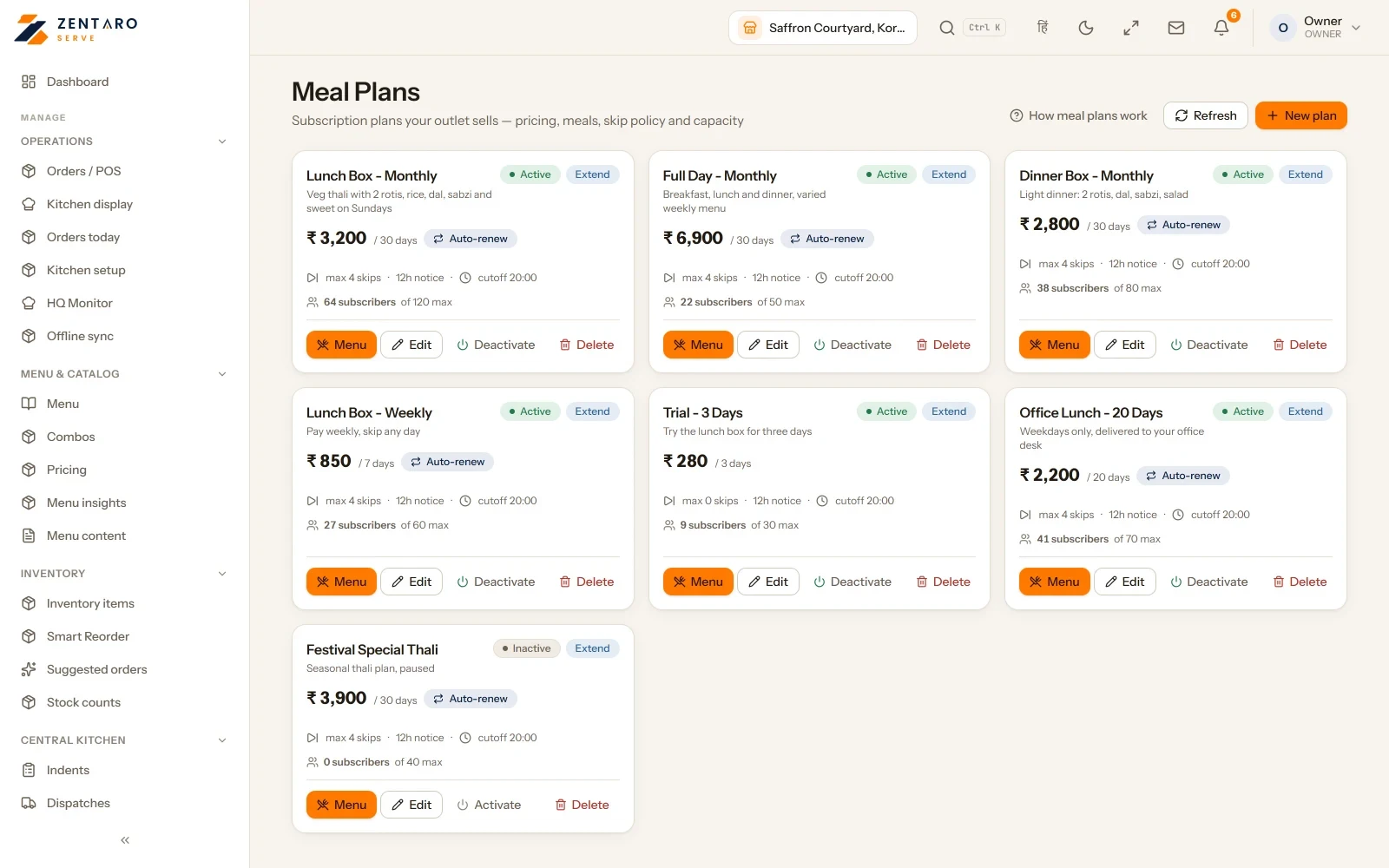
Zentaro Serve runs meal plans, subscribers, skipped days, packing and delivery to drop points, so the plan you price here can be run without a notebook.
See tiffin software