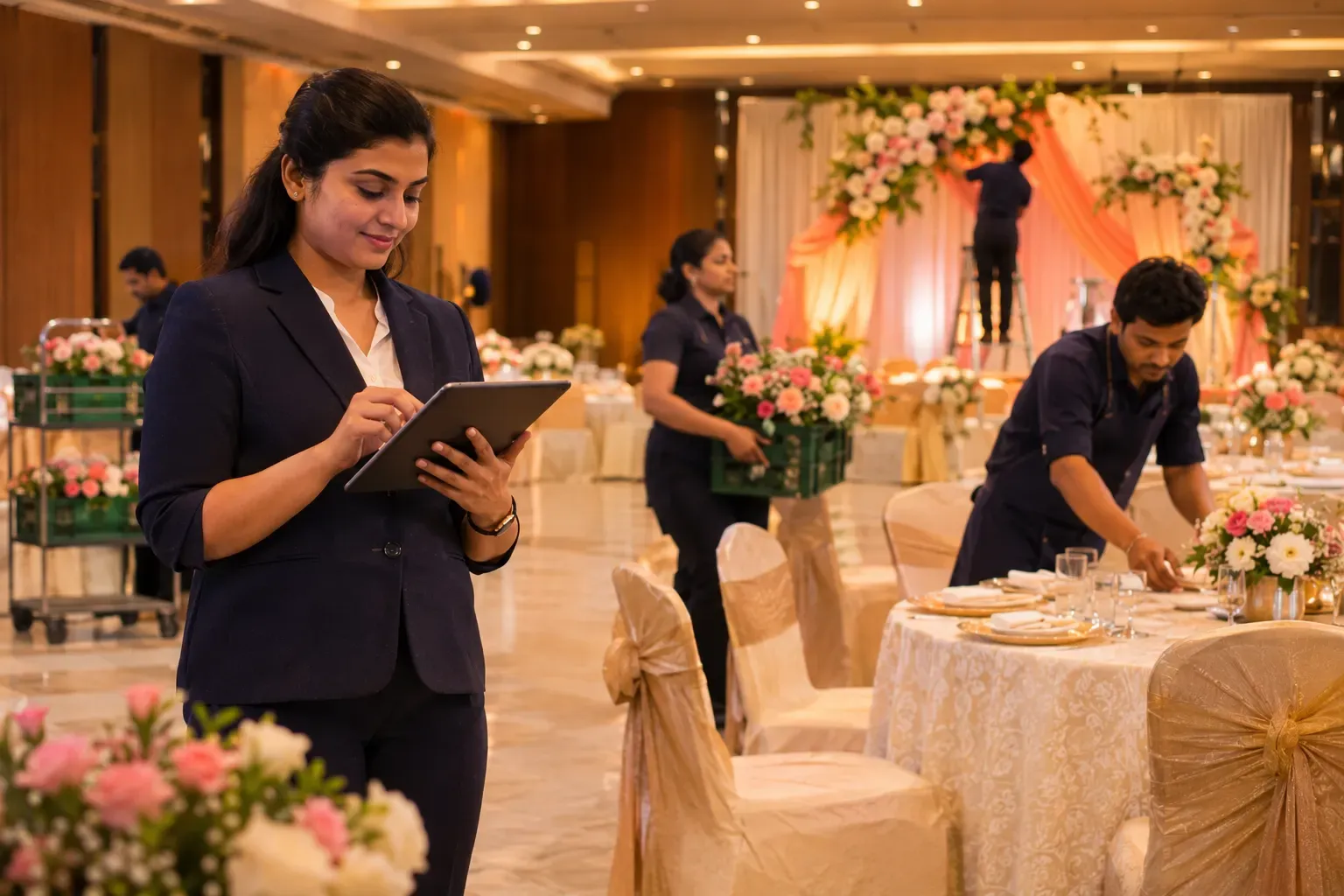
One enquiry, on rails to event day
The diary is not the problem. The problem is that between the diary entry and the event day sit a dozen small jobs, each owned by whoever happens to remember it. Functions don't fail in one big way; they leak — an unconfirmed booking here, an unpaid advance there, a kitchen that learns about the 120-cover reception on the morning of.
What the automated version looks like
Event automation means the chain between "enquiry" and "event day" runs on rails, and your team touches it only where judgement is genuinely needed.
The quote builds itself from your packages. You design a buffet once — courses and sections with choice rules ("any three starters, any four mains, dessert counter included"), a per-cover price, a minimum and a guaranteed cover count. The next enquiry becomes a priced proposal by picking a package and a number. No spreadsheet, no evening with a calculator.
The customer says yes themselves. The proposal goes to the customer as a link — a page of their own, no app to install. They review it and approve it with an OTP on their own phone. That detail matters. Nobody on your staff marks it accepted for the customer. So if the starters are disputed three weeks later, you can see what was approved, by whom and when.
The advance collects itself. Approval triggers a payment link. The advance arrives by UPI or card and lands against the event. It is tracked, so you no longer check a bank statement against a message thread to answer "has the advance come?"
Everyone is kept informed without anyone chasing. The customer is reminded before every due date — balance, confirmation cut-offs. The manager sees what's pending at a glance. The teams you've assigned — kitchen included — get their preparation task reminders as the date approaches. The event executes off a task list, not off somebody re-reading an email thread at 7 a.m.
The same discipline, smaller sizes
Once payment links, reminders and scheduled prep exist as rails, two more workflows ride them free of charge.
Table bookings with an advance (in progress). Today you can take an advance with a booking, and when the guest arrives the advance is already on the bill. Automatic payment links, reminders and release at a cut-off are being built.
Party orders placed days ahead. Take fifty biryanis for Saturday, ordered on Tuesday. The advance is collected up front and the balance is tracked.
What deliberately stays in your hands
Automation earns trust by knowing its limits. Pricing a wedding is judgement — the enquiry and the quote are yours. Deciding who owns the buffet line, the bar and the mandap is yours; the system reminds the teams you chose. And purchasing for the event is a decision you trigger from your inventory, not something that orders stock behind your back.
The test to apply to any system: after the customer says yes, count the phone calls your team still has to make for the event to happen correctly. Every one of those calls is a place the software stopped working and a person took over.
A diary remembers the event. The difference worth paying for is a system that runs it.