Two kinds of QR
A restaurant can show a QR in two ways.
| Item | Fixed QR (static) | QR with the amount (dynamic) |
|---|---|---|
| What it is | One code, always the same, often stuck on the counter | A new code for each bill, with the amount built in |
| The guest | Must type the amount | Scans and confirms |
| Risk | Wrong amount typed, wrong shop picked | Low |
| Matching to a bill | Hard, you must match by time and amount | Easier, each code belongs to one bill |
A fixed QR works for a tea stall. For a restaurant with many bills an hour, a QR on the bill with the amount built in is safer and faster.
How to check that the money arrived
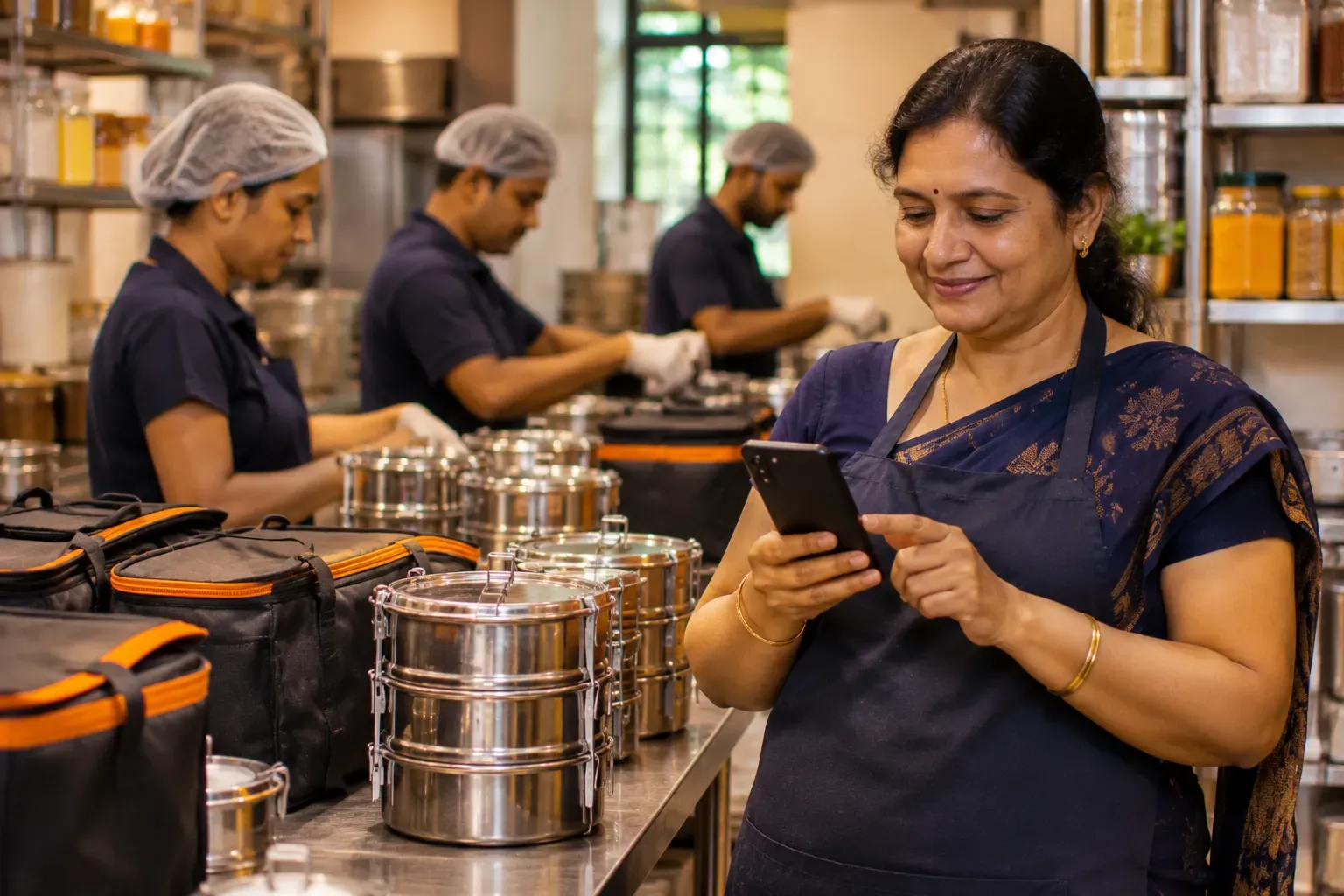
A guest may show a green screen on their phone. That is not proof. Screens can be old, faked or from another payment. Check on your side.
- Look at your own payment app, the soundbox or the notification on your phone.
- Check the amount and the time.
- Match it with the bill you are about to close.
- Only then mark the bill as paid.
This is the UPI settlement check. It takes seconds, and it stops most disputes.
Payment reconciliation
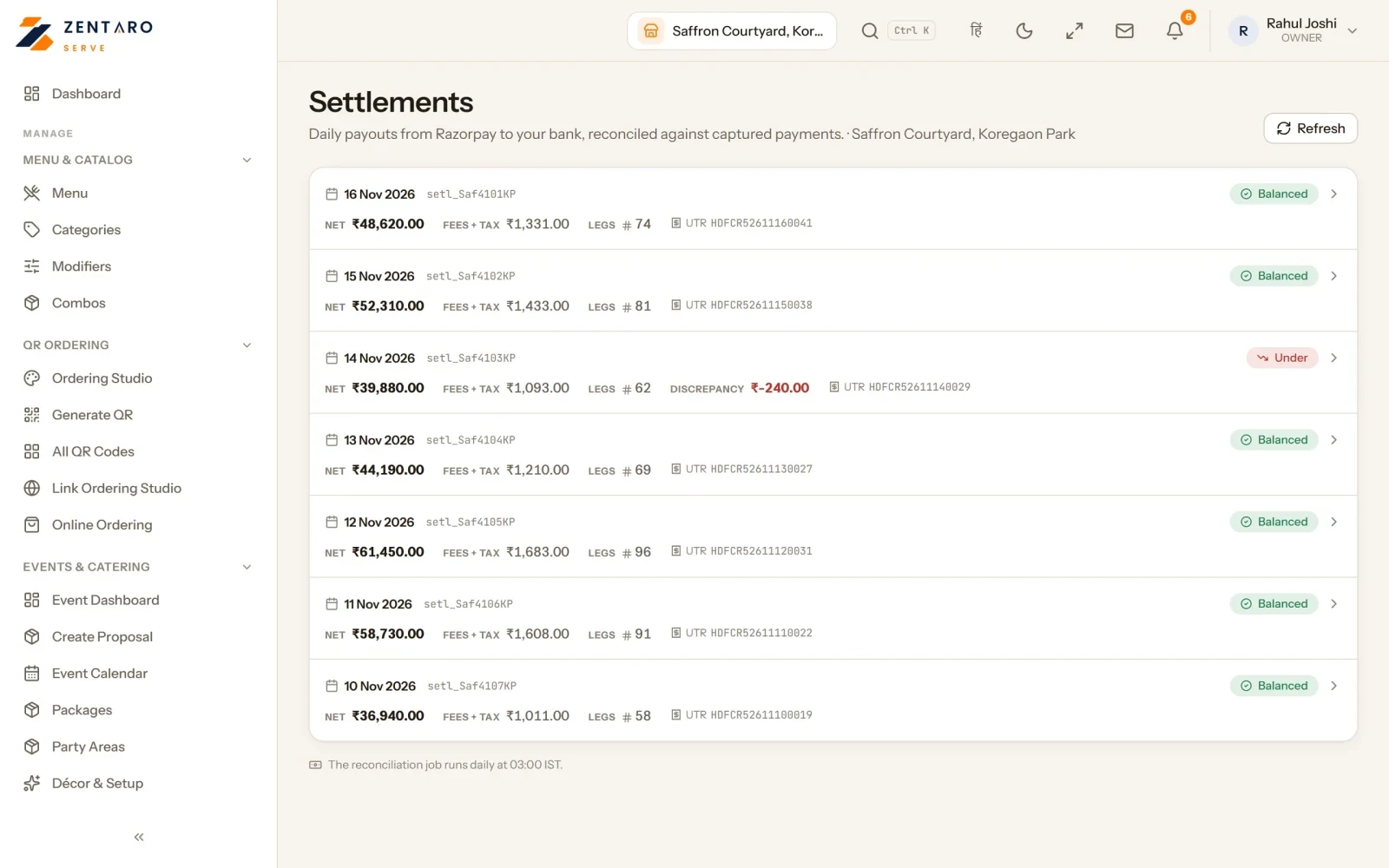
Reconciliation means matching two lists: what your till says was paid by UPI, and what your bank or payment app says arrived. Do it every day.
- Take the UPI total from your till for the day.
- Take the UPI total from your payment app or bank.
- Compare them. They should match, except for payments that are still in transit.
- Chase any gap the same day, while memory is fresh.
Payments from your gateway can reach your bank a day or more later. Know your gateway's timing, so you do not call a delayed payment missing.
Split tender: cash and UPI on one bill
Guests often pay part by cash and part by UPI. This is called split tender. Record each part on the bill.
- Enter the cash amount and the UPI amount, and check that they add up to the bill total.
- Collect the cash first, and then show the QR for the rest. Or the other way around, but be consistent.
- At day close, each part goes to its own total.
Read our guide on how to split a restaurant bill for splits between guests.
Example: a bill paid half cash, half UPI
This is an example, with made-up amounts. A table's bill is 1,000. The guest pays 500 in cash and 500 by UPI.
| Step | What happens |
|---|---|
| 1 | The cashier enters 500 cash on the bill |
| 2 | The till shows 500 left and a QR for 500 |
| 3 | The guest scans and pays 500 by UPI |
| 4 | The cashier checks the payment on the phone: 500, a minute ago |
| 5 | The bill closes with 500 cash and 500 UPI |
| 6 | At night, the day total shows these two parts |
The next morning, the owner sees UPI of 500 in the bank and cash of 500 in the drawer. Both match the till.
Refunds
A refund after a UPI payment needs care. Money must go back to the same account.
- Allow a refund only with a manager's approval, and write the reason.
- Send the refund through your payment app or gateway. Do not pay it back in cash from the drawer unless your rule says so.
- Note the refund in the day total, so UPI in the till matches UPI in the bank.
Common mistakes
- Trusting a screenshot. Check on your own device.
- A fixed QR on a busy counter. The wrong amount is easy to enter.
- Not matching at day close. Gaps stay unknown.
- Refunding in cash by habit. The UPI total no longer matches.
- Forgetting transit time. A payment that lands tomorrow is not missing.
A short checklist
- Does the QR carry the bill amount?
- Do you check the payment on your own device before closing the bill?
- Are split payments recorded in parts?
- Do you match UPI totals at day close?
- Are refunds approved and recorded?
Common questions
How do I put a UPI QR on the bill?
Use a QR that carries the bill amount, so the guest scans and confirms without typing. Many billing systems print it on the bill.
How do I check that a UPI payment arrived?
Look at your own payment app, soundbox or bank message. Check the amount and the time. Do not rely on the guest's screen.
What is payment reconciliation?
It is matching the UPI total in your till with the money in your bank or payment app, usually every day.
Can a guest pay part cash and part UPI?
Yes. This is split tender. Record each part on the bill, and make sure the parts add up to the total.
How should I handle a UPI refund?
Get a manager's approval, write the reason and send the money back through your payment app or gateway.
Where Zentaro Serve fits
Zentaro Serve takes cash, card and UPI in any mix on one bill, and a guest can pay from a QR code on the bill. You use your own Razorpay account.
See restaurant payments