Payments, cash and control articles
How to take UPI and credit, close the day, find cash that does not match, and keep staff, discounts and voids under control.
11 articles
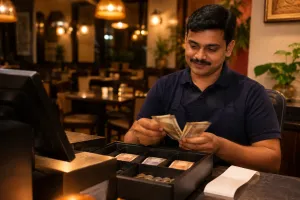 Payments, cash & control
The day-end ritual: cash-up, Z-report and closing your restaurant properly
Blind counts, X vs Z reports, unsettled bills and tip-outs — a 15-minute nightly routine that finds small losses before they become habits.
Read the guide → Payments, cash & control
Khata and credit customers in a restaurant
How to keep track of regulars who eat now and pay later: a simple khata ledger, credit limits, weekly follow-up and a made-up example page.
Read the guide → Payments, cash & control
Petty cash register for a restaurant, with format
How to record small daily spends so cash still balances: a petty cash register format, voucher habit, float, approval and a weekly example.
Read the guide → Payments, cash & control
Why the till does not match: cash short or over
Why cash is short or over at day end and how to find the gap: change errors, missing bills, petty cash and unsettled tables, with an example.
Read the guide → Payments, cash & control
UPI QR on the bill and how to check the payment
How to take UPI at the table and be sure the money arrived: QR on the bill, settlement check, split cash and UPI, refunds.
Read the guide → Payments, cash & control
Void, cancel and discount control for restaurant owners
How to stop voids, cancels and discounts from leaking money: manager approval, reasons, reprint and duplicate bill rules, audit trail.
Read the guide →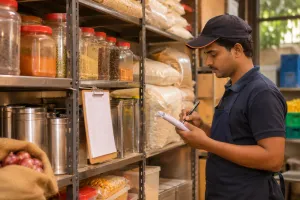 Payments, cash & control
How to reduce theft and pilferage in a restaurant
Simple checks that reduce theft in a restaurant: cash control, stock count, voids, roles and audit, plus signs to watch for.
Read the guide → Payments, cash & control
Month-end restaurant audit: a simple method
How to run a restaurant audit at month end: stock audit, cash check, bills check and expenses, with a 40-seat cafe checklist.
Read the guide → Payments, cash & control
How to read a day-end report, line by line
What to look at first in a day-end report: Z report, X report, sales by mode, voids and discounts, with a sample read from top to bottom.
Read the guide → Payments, cash & control
Staff roles and permissions in a restaurant
Which role may do what in a billing system: owner, manager, cashier, waiter, captain and kitchen. A four-role table and discount caps.
Read the guide → Payments, cash & control
Restaurant cash flow explained: why profitable restaurants still run out of money
Why a restaurant can show a profit and still run short of cash: timing, tied-up money, a worked example and a weekly cash routine.
Read the guide →