Step 1: know the plate cost
You cannot price a dish you have not costed. The plate cost is the total cost of every ingredient on one portion, including the small things like oil, spices and garnish. If you need help, read how to cost a dish first, or use the recipe cost calculator.
Count only what goes on one portion. Check the portion size too. If the chef puts 220 grams in the plate and your card says 180, your cost is wrong.
Step 2: pick a target food cost percentage
Food cost percentage is plate cost divided by selling price, times 100. Many restaurants aim for a range, and the right number depends on your kind of place. A counter with small bills may need a lower number. A place with high rent and service may need a different one. Our guide to food cost percentage explains the idea.
Pick a target for the dish type, not one number for the whole menu. A dal can run at a low percentage. A seafood dish may run higher and still earn well in rupees.
Step 3: work out the price
The simple formula is:
Selling price = plate cost ÷ target food cost percentage
Written as a decimal, 30 percent is 0.30. So a plate cost of ₹90 divided by 0.30 is ₹300.
This is a starting point. It does not know about your rent, your staff or your guests.
Step 4: look at the margin in rupees
Percentages hide rupees. Look at the margin, which is the selling price minus the plate cost.
A cheap dish at a low percentage may earn only ₹40 per plate. A pricier dish at a higher percentage may earn ₹150. If both sell the same number, the second dish pays more of your bills. When you price, ask both questions: what is the percentage, and what is the margin in rupees?
Step 5: check the market and the menu
Now look at what guests will pay.
- What do nearby places charge for a similar dish and portion?
- Does the price sit well next to the other dishes on your menu?
- Is it a dish people compare, like a tea or a thali, or a dish people pick for the experience?
If the market will not pay your price, you have three honest choices. Cut the portion a little, change the recipe, or accept a lower margin on this dish and make up for it on others. Do not shrink the portion in the kitchen and leave the recipe card unchanged.
Step 6: decide how tax shows on the price
Guests see either a price that includes tax or a price with tax added later. Decide which you use, and make sure the menu says it. If your menu price includes tax, the money you keep is less than the menu price. Work out the plate cost against the amount you keep, not the full menu price.
How tax applies to your restaurant is a question for your accountant. This article does not state any rate. The point is to avoid a mistake: pricing from the full price, and then finding that part of it went to tax.
Example: a paneer dish priced three ways
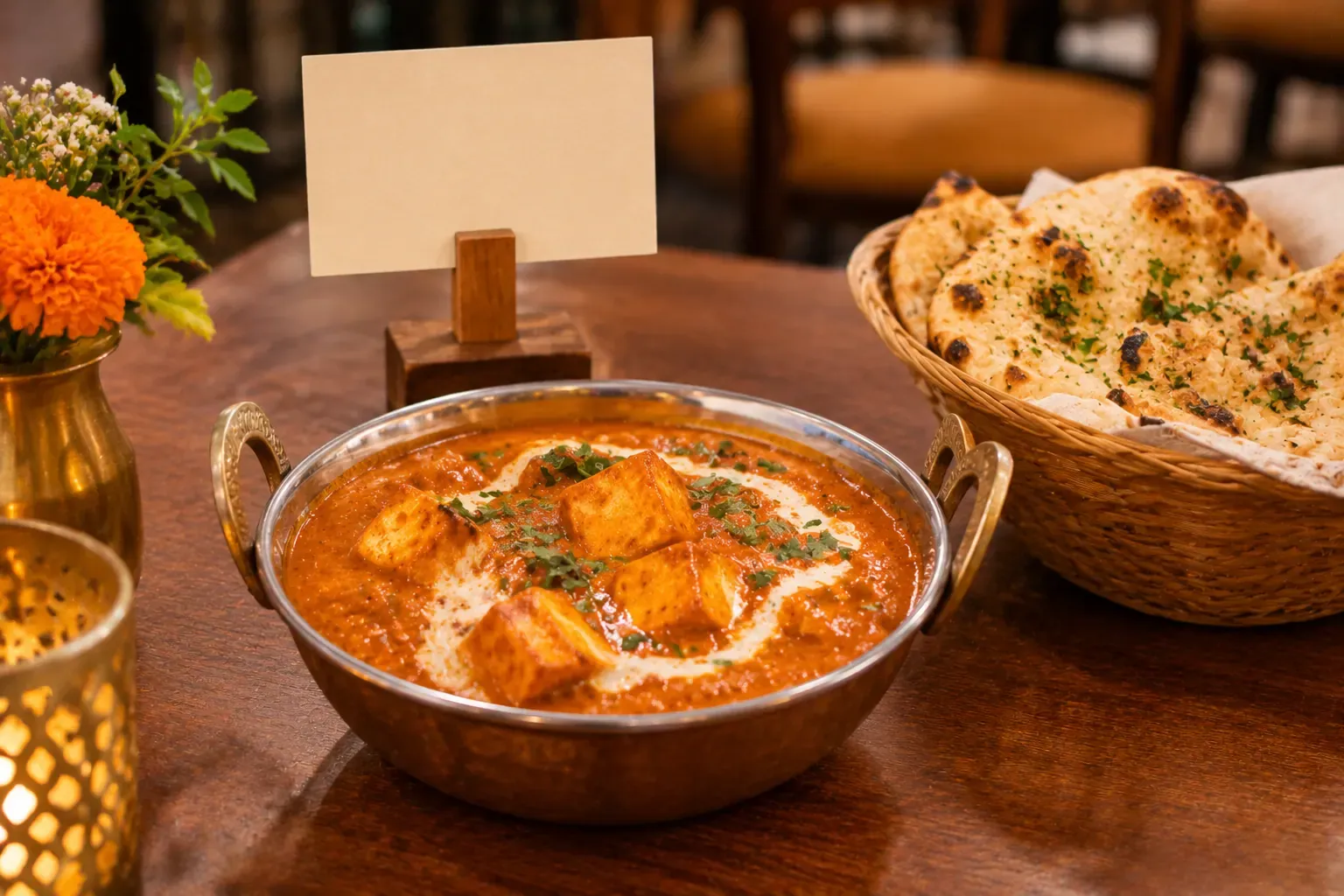
This is an example with made-up costs. A paneer butter masala has five main ingredients.
| Ingredient | Cost per plate |
|---|---|
| Paneer | ₹38 |
| Tomato and onion gravy base | ₹12 |
| Butter and cream | ₹14 |
| Cashew paste and spices | ₹10 |
| Oil, garnish, salt | ₹6 |
| Plate cost | ₹80 |
Now try three prices.
| Price | Food cost % | Margin per plate |
|---|---|---|
| ₹249 | about 32% | ₹169 |
| ₹279 | about 29% | ₹199 |
| ₹299 | about 27% | ₹219 |
At ₹249, the dish is a good value and sells in volume, but it earns less per plate. At ₹299, each plate earns more, but fewer guests may order it. The middle price of ₹279 may be a fair balance in a place with steady lunch traffic. The right answer depends on your guests. Watch sales for a few weeks and adjust.
This is a made-up example, not a price suggestion.
Common mistakes
- Pricing from the plate cost of last season.
- Forgetting the small items like oil, garnish and packaging.
- Copying a competitor's price without checking your own cost.
- Using one percentage for the whole menu.
- Ignoring portion size.
- Setting a price and never revisiting it when costs move.
A short checklist
- Is my plate cost current?
- Is the portion the same in the kitchen and on the card?
- Do I have a target for this dish type?
- Have I looked at margin in rupees too?
- Have I checked nearby prices?
- Does my menu say whether the price includes tax?
Common questions
How do I price a dish in a restaurant?
Find the plate cost, divide by your target food cost percentage, then adjust for the market and your menu.
What food cost percentage should I use?
It depends on your type of restaurant. Pick a target for each kind of dish and review it as costs change.
Should I price by percentage or by margin?
Look at both. A percentage shows efficiency. A margin in rupees shows how much each plate earns.
What if my price is too high for guests?
Cut the portion a little, change the recipe, or accept a lower margin on that dish. Keep the recipe card honest.
Should the menu price include tax?
That is your choice and your accountant's advice. Say clearly on the menu which one you use.
How often should I review prices?
Whenever a main ingredient changes in price, and at least every few months for your best sellers.
Where Zentaro Serve fits
In Zentaro Serve, a dish is linked to its recipe, so its food cost follows your buying prices. That makes it easier to see when a price needs a second look.
See menu management