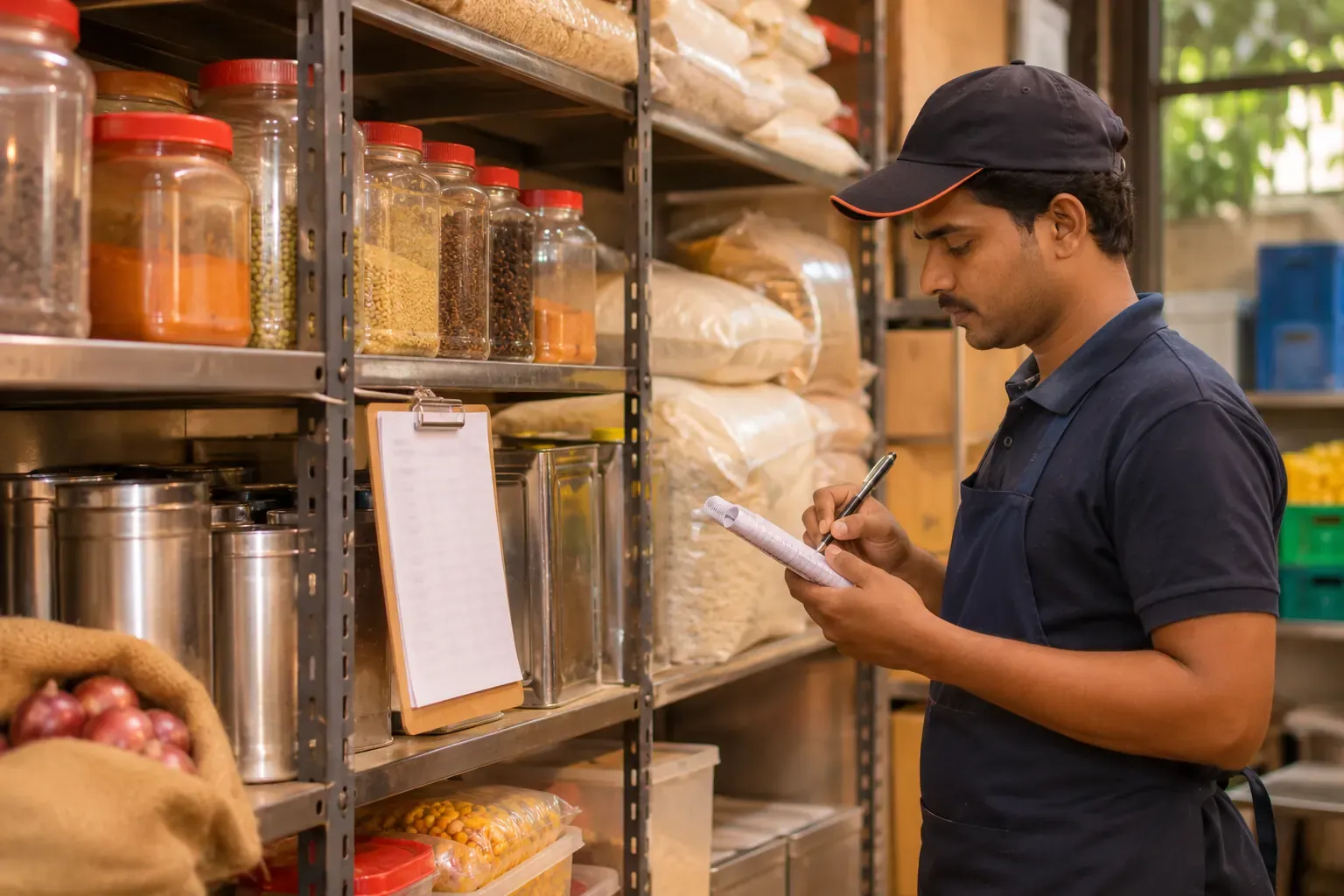
Be fair first
Most staff are honest. Checks are not an accusation. They protect honest staff too, because the numbers clear them when something goes missing. Explain the checks to your team as the way the business works.
The usual places for loss
| Place | What goes wrong | The check |
|---|---|---|
| Cash | Short cash at close, bills not rung up | Daily cash-up, compare with the till |
| Bills | Voids, cancels, free items | Approval, reasons, a weekly report |
| Stock room | Items taken in small amounts (pilferage) | Weekly stock count, locked store |
| Deliveries | Short weight, short count, missing items | Check at the door against the bill |
| Kitchen | Extra food made and given away | Compare sales with usage |
| Bar | Pours not recorded | Count bottles each night |
Cash control
- Count the drawer at the start and end of each shift, with two people when you can.
- Ring every order before the food leaves the kitchen.
- Keep petty cash in a separate box, with slips for every spend. Read our guide to the petty cash register.
- Make cash-up a fixed habit. See why the till does not match.
Voids and discounts
Voids are a classic place for cash theft. Give each person a personal login and set limits by role. Ask for a reason on each void. Our guide on void and cancel control shows how.
Roles and access
Not everyone needs to see everything. Give each role only the access it needs. A cashier does not need to edit prices. A cook does not need to open the drawer. Remove access on the day someone leaves.
Stock count
A stock count is the strongest check on pilferage. Compare what you should have with what is on the shelf.
- Count the item.
- Compare it with the register: opening plus purchases minus usage.
- Write down the gap.
- Look into repeated gaps on the same item.
Read our stock register guide for the layout.
Audit: check the checkers
An audit is a second look by someone who does not do the work. The owner or an outside person can do it. Once a month, pick a few things at random: a count, a petty cash slip, a delivery bill. Check that each one matches. Staff who know an audit can happen are less likely to cut corners.
Staff theft signs
These signs are not proof. They are reasons to look closer.
- Cash short on the same shift again and again.
- Many voids or cancels by one person.
- Stock of one item falls faster than sales suggest.
- A staff member refuses leave, or never takes a day off.
- A store room that is often unlocked, or a key that many people hold.
- Friends who often get free food.
- Delivery bills with no signature.
If you see several, check the numbers before you talk to anyone.
Example: a month with stock variance traced to a gap
This is an example, with made-up details. A cafe owner sees cooking oil used faster than sales suggest. Over a month, the variance is large.
| Week | Oil bought | Oil used by sales | Gap |
|---|---|---|---|
| 1 | 2 cans | 1.8 cans | 0.2 |
| 2 | 2 cans | 1.7 cans | 0.3 |
| 3 | 2 cans | 1.8 cans | 0.2 |
| 4 | 2 cans | 1.7 cans | 0.3 |
The gap is steady, about a quarter of a can each week. The owner looks at the store room. The door is open during delivery, and the room is not locked afterward. A key is also held by four people. The owner moves the key to two people, locks the door after each delivery and counts weekly. The gap shrinks. The cause may have been theft, or it may have been waste or spills. The point is that the count showed where to look, and a simple fix followed.
Common mistakes
- Trusting without checking. Trust is good, numbers are better.
- Counting stock once a year. Count weekly for key items.
- Shared logins. You cannot tell who did what.
- Firing on a guess. Check the facts first.
- Never checking deliveries. Short deliveries are a common loss.
A short checklist
- Daily cash-up, and a personal login for each person?
- Void report read each week?
- Weekly stock count of the key items?
- Deliveries checked at the door?
- Store room locked, with few keys?
- A monthly spot check?
Common questions
What simple checks reduce theft in a restaurant?
Count cash daily, count stock weekly, give each person a login with limits, read the void report and check deliveries at the door.
What is pilferage?
Pilferage is small, steady theft of food or stock, taken in small amounts that are easy to miss.
How do I find out if stock is going missing?
Do a stock count and compare it with opening stock plus purchases minus usage. Repeated gaps on one item need a closer look.
What are signs of staff theft?
Repeated cash shortages on one shift, many voids by one person and stock that falls faster than sales suggest. These are reasons to check, not proof.
Should I tell staff about the checks?
Yes. Explain that checks protect honest staff too. Staff who know numbers are compared are less likely to take small amounts.