Food cost and stock articles
How to cost a dish, measure portions and keep the store in order: par levels, reorder points, registers and first-in first-out.
8 articles
 Food cost & stock
How to cost a dish: recipe costing and food-cost percentage, step by step
From recipe card to plate cost with a fully worked butter-chicken example — yield, unit conversion, batches and the target percentage.
Read the guide →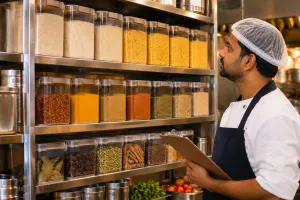 Food cost & stock
How to set a par level in a kitchen
Decide how much of each item to keep on the shelf: par level from daily use, delivery days and a safety buffer, with an onion example.
Read the guide → Food cost & stock
Purchase register and supplier bills, made simple
Record what you buy and match it to supplier bills: a purchase register format, goods received check, payment due dates and a weekly example.
Read the guide → Food cost & stock
Stock register format for a restaurant (with example)
The columns a restaurant stock register needs: opening, received, used, closing, physical count and variance, with a one-week rice and oil example.
Read the guide →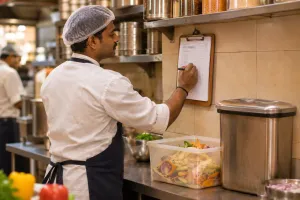 Food cost & stock
Wastage register format for a kitchen
What a kitchen wastage register should record: item, quantity, reason and cost. A simple format and a one-week cafe example.
Read the guide →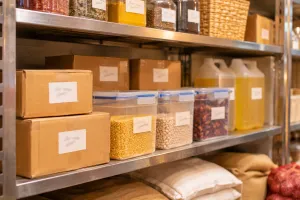 Food cost & stock
FIFO and FEFO in a restaurant store room
How to rotate stock in a kitchen store room: FIFO and FEFO, date labels, shelf layout and a dairy shelf example with three batches.
Read the guide →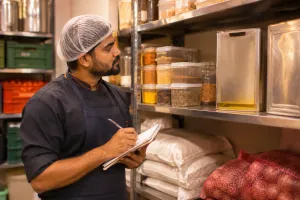 Food cost & stock
Reorder level and minimum stock for a kitchen
When to reorder an item and how much: minimum stock, reorder point, safety stock and lead time, with a cooking oil example.
Read the guide →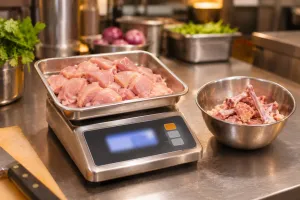 Food cost & stock
Yield and portion size: how to measure them
How to run a yield test and set a portion size: trim loss, usable weight, portion cost and a 5 kg chicken worked example.
Read the guide →